Mappeditalia.it © Tutti i diritti riservati


TOURIST ROUTE - SECOND PART
TOURIST ROUTE - FIRST PART
HISTORICAL INFORMATION
Spinazzola, approximately 435 meters above sea level, is nestled between Puglia and Basilicata and has been part of the province of Barletta-Andria-Trani since 2004. It is part of the Alta Murgia National Park and was once part of the mountain community of Murgia Barese Nord-Ovest. It borders Basilicata to the west, to which it belonged until June 4, 1811, when Joachim Murat, redrawing the provinces of the Kingdom, decreed Spinazzola's transfer to the Terra di Bari, removing it from the district of Matera. The hilly territory known as the "Sella di Spinazzola" is joined by the Murge and the Lucanian Apennines through the Fossa Bradanica, crossed by the Bradano River and its tributaries. The first human settlements certainly date back to the Neolithic, with precious Bronze Age remains. Various hypotheses maintain that Spinazzola arose from an urban settlement beginning in the 3rd century BC, developing around a Roman station for supplying troops along the Appian Way between Venosa and Gravina in Puglia. The city's name may derive from ex pino solo, from which Espinosolo, Spinosolo, and Spinazzola come. Other historians hypothesize that the name Ad Pinum was replaced in 1125 with the name Spinacium Castrum, which then became Spinaciolae Castrum under the Normans and, finally, Spinazzola. Other hypotheses maintain that the name has Latin origins, Oppidum Pini, due to the presence of a large pine tree depicted in the municipal coat of arms. Its geographical location, integrated into the Tratturo Regio Melfi-Castellaneta, certainly influenced its history. After the fall of the Western Roman Empire (476 AD), the last Emperor, Flavius Romulus Augustus, was deposed by Flavius Odoacer, who proclaimed himself the first king of Italy. Spinazzola, like the entire southern Italian region, fell prey to various barbarian hordes. From the Middle Ages, the city came under the influence of the Saracens, the Normans of Hauteville, and the Spanish viceroyalty. After the Hautevilla period, the Swabians arrived, and finally the Angevins and Aragonese. During the Spanish viceroyalty, Spinazzola was dominated by the Pignatelli Marquises, becoming a fiefdom. In 1735, the King of Naples, Charles III of Bourbon, granted Spinazzola the honorary title of city, investing it with civil and institutional powers, as a legal entity. Having developed as an agricultural center, by 1861 it had over 10,000 inhabitants, recording its peak growth in 1951 with over 13,000 inhabitants. At the time, it was known as the "granary of Italy." Wheat, corn, and tobacco were grown in large quantities. Beginning in the late 1950s, there was a progressive depopulation and abandonment of the land for the industrialized centers of Northern Italy. The current population is over 6,000.
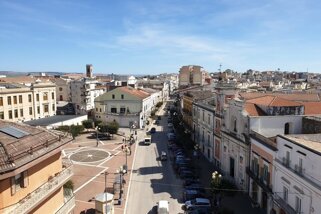
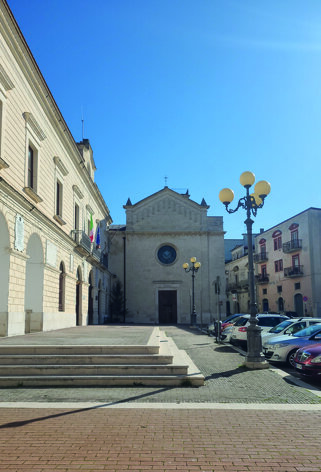
A visit to Spinazzola can be divided into several evocative itineraries. The first certainly starts from Piazza Plebiscito, crossing Via Felice Cavallotti and arriving, along Via Carlo De Cesare, at the Mother Church dedicated to Saint Peter the Apostle. It is in Romanesque style, presumably built around 1300 and subsequently modified, especially in the 17th century. The ancient name of the city, Spina Aurea, is engraved on the portal. Originally a Latin cross, it has three rectangular naves, divided by four arches. The apse houses, on the high altar, a painting of Saint Peter by Luciano Bartoli (1953). It preserves works from the Barbarian and Byzantine periods. Of note are the canvas of the Madonna of Monserrato and the altarpiece of the Madonna and Child known as the Madonna of the People or the Madonna of the Rose (14th century). Also inside are a silver bust of Saint Sebastian (the patron saint) and the baptismal font where Pope Innocent XII was baptized in 1615. The bell tower, built on four levels, is completely detached from the main body of the Cathedral. On the Tuesday after Easter, the Holy Icon of the Madonna del Bosco, the city's patron saint, arrives in procession from the Sanctuary to the Mother Church, where it is kept until August 14th. Before continuing your visit to the city, it is a must to retrace the route following the archaeological excavations: of particular interest are the remains of the foundations and walls of the castle, where Pope Innocent XII was born, medieval ceramic fragments, and the discovery of a Bronze Age settlement. The itinerary in the old town concludes with traces of the presence of the Knights Templar (1118–1314), although few certain documents exist regarding their names and individuals. Other must-sees in the city include places that preserve art, culture, faith, and history, such as the churches and the "Trisorio-Liuzzi" library and art gallery, named after the first president of the Puglia Region, who was born in Spinazzola. The art gallery displays the 15th-century Madonna of Constantinople. The continued presence of religious orders contributed to the construction of churches and convents. The first church, with its adjacent convent of San Francesco, was built outside the walls. In 1541, the Franciscan friars erected a new convent near the town near the ancient church of the SS. Annunziata. Reconstruction took place in 1632, and its dedication by the Bishop of Venosa, Giacinto Tauro, dates back to March 20, 1657. The church of Maria Santissima Annunziata in Spinazzola was erected in 1938 by the Bishop of Venosa, Domenico Petroni. The tuff façade is divided into two horizontal sections: the lower section with the central entrance portal and two small side windows corresponding to the side naves. A large rose window opens onto the finely decorated portal. The interior has three naves and the altar is of the basilica type. Important works in the church include a fresco depicting a Madonna and Child between St. Anthony of Padua and St. Peter; the canvas of the Annunciation, a valuable work by A. Stabile (1584); and two canvases by late-Mannerist painters. In the right nave, another canvas of the Annunciation from the Neapolitan School of the 17th century is visible. The central nave has a wooden truss roof. The floor is made of polished marble slabs with red inserts.
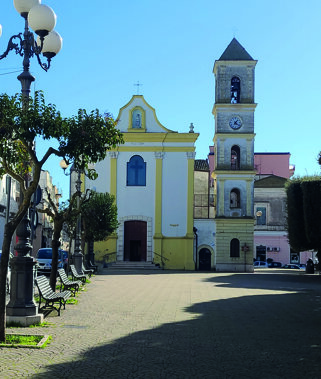
The church of San Sebastiano, the city's patron saint, is located in the square of the same name and houses numerous extremely valuable works of art. Between the current church and the bell tower, completed in 1959, lies an ancient crypt. It has a single rectangular nave with a round vault and side chapels delimited by pointed arches from which the central vault joins, forming a series of recesses. The wooden choir is located in the presbytery. The only marble element is the tabernacle (1942). The Church of Purgatory in Spinazzola is a religious building of notable historical and artistic interest, located in the central Piazza Plebiscito. The church, with its Baroque façade and characteristic bell tower, likely dates back to the 16th century and houses valuable works of art, including a 17th-century canvas by Francesco Guarino. The façade is divided into three sections by pilasters rising from a rusticated base and culminating in Corinthian capitals. The bell tower is divided into three orders by molded cornices and features a coat of arms with a tower and a pine tree, symbols linked to the town's origins. The complex was likely founded in the 16th century. The church is associated with devotion to the cult of the dead and is an example of Apulian Baroque architecture. The Civic Tower (16th century) narrates the town's history through plaques affixed to its walls. The inscription on the dial, "LUCRO APPONE," encourages people to consider time as a source of profit, not just material gain. The single-nave church of the Madonna del Carmelo, better known as the Church of San Nicola, bears the date 1958 on the portal, indicating its neoclassical façade, divided into three sections by pilasters on a high plinth with Ionic capitals. The bell tower also dates back to the same period. The central dome is divided into eight segments and two lateral arches. In the apse, the high altar is dedicated to Our Lady of Mount Carmel, with a wooden choir dating back to 1605. Built in 1971, the current sanctuary, dedicated to Our Lady of the Woods (patron saint of the city along with Saint Sebastian), is located three kilometers from the town center. Marian worship in this place developed in the 16th century when, according to legend, an icon depicting the Madonna and Child was found near the Gadone Turcitano valley. The historical link between Spinazzola and the Grimaldi family is represented by the Garagnone Castle, granted to this family by Charles V in 1532. This castle was owned by the Grimaldis for over a century. Spinazzola is part of the Grimaldi Historic Sites; Prince Albert II visited the Garagnone Castle and our territory in April 2022, where he appreciated the gastronomic excellence of the Murgia municipality. The Garagnone Castle played a crucial role in the medieval Alta Murgia region during the Norman reign of the Hauteville family. Half destroyed in the 1731 earthquake, the castle can be described as an invisible castle, as it was skillfully constructed from stone and materials sourced from the hills, making it easily concealable. Today, the fortress is a highly popular tourist destination, visited by many.
ALTA MURGIA NATIONAL PARK
THE 21 ARCH BRIDGE
THE BAUXITE MINES
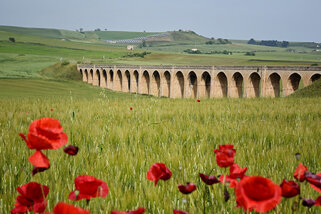
The 21-Arch Bridge (1888 and 1891) along the Gioia del Colle-Rocchetta Sant’Antonio railway line, in the western Murgia region, was 140 km long and connected Puglia and Basilicata to the Daunia Sub-Apennines. The line was decommissioned in 2011, after more than a century of operation. The bridge, although unused, is considered a monument of the Murgia region and is in excellent condition despite never having been restored. It consists of twenty-one round arches built with blocks of local limestone tuff, likely sourced from the nearby Canosa quarries. A monumental work, a symbol of 19th-century engineering. Initiatives are underway to promote the line as a tourist attraction for cycling and nature lovers, especially given its proximity to the Alta Murgia National Park. The place gained a certain notoriety in 2021 following the filming on this bridge of Vasco Rossi's music video for his single, Siamo qui, directed by Giuseppe Romano, aka Pepsy Romanoff, and starring actress Alice Pagani.
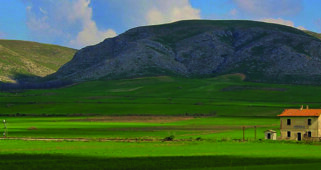
It extends over 68,077 hectares in the heart of Puglia, encompassing thirteen municipalities (Altamura, Andria, Bitonto, Cassano delle Murge, Corato, Gravina in Puglia, Grumo Appula, Minervino Murge, Poggiorsini, Ruvo di Puglia, Santeramo, Spinazzola, and Toritto) between the provinces of Bari and Bari. Its richness lies in the variety of species associated with the arid landscape, with plants and animals that inhabit the arable fields and rocky pastures, finding the Murgia steppe environment an optimal breeding ground. Approximately 1,500 plant species are recorded here, representing 25% of the 6,000 present in Italy. Important ecological niches support the life of approximately 130 animal species, including amphibians, reptiles, mammals, and birds. Lanner falcons, lesser kestrels, European rollers, red kites, larks, short-toed larks, and black-eared wheatears are just some of the bird species observed in the Park, which have significant conservation and scientific value. Caves and sinkholes are inhabited by bats, while abandoned quarries and deserted farms are a refuge for foxes, martens, weasels, and badgers. Rocky pastures dominate the vast Murgia landscape, where plant species typical of the Mediterranean dry grassland, the characteristic grassland formation, thrive. The main characteristic is the abundance of grasses and bulbous plants (orchids), which, with their enchanting blooms, pepper the grassland with vibrant colors. Due to its uniqueness and rarity, the pseudo-steppe habitat (Mediterranean dry grassland), is included in the list of habitats of Community importance, protected by Directive 92/43/EEC. The Alta Murgia Park has been proclaimed a UNESCO Global Geopark, another important milestone in promoting the geological richness, natural beauty, and biodiversity of this extraordinary territory.
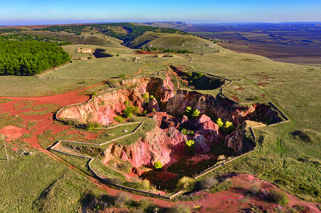
An open-pit mining site in the Alta Murgia National Park, located in Zone A (an integral reserve area due to its high naturalistic value and exceptional biogeographical interest) and approximately 10 km from the town of Spinazzola. The Bauxite Mines were discovered in 1935, while between the 1950s and 1980s, the site was exploited to extract minerals and aluminum. This activity made it one of the most important bauxite deposits in Europe, a driving force of the local and national economy. Depicted on one of the five stamps dedicated to the Alta Murgia, the Bauxite Mines are a geological site of international importance in the Park, a heritage of industrial archaeology that enchants thousands of visitors with its unique red hues. A comprehensive restoration project has given new life to the Bauxite Mines, transforming them from a neglected site at the mercy of illegal waste dumping into a safe, accessible area characterized by unique environmental, geological, and historical-cultural features. The interventions have enhanced the site's existing habitats, promoting sustainable use through an educational trail and scenic overlooks. The site can be admired from above through the educational area and specially designed observation points, as the erosion of the walls prevents safe access to the interior. Access to the mine floor, however, is restricted to Park technical personnel and authorized persons. To prevent access, in addition to the installation of an iron bar, Presidential Ordinance No. 01/2023 was issued to protect public safety and the site.
POPE INNOCENT XII
RITES AND EVENTS
FOUNTAINS AND VALLEYS
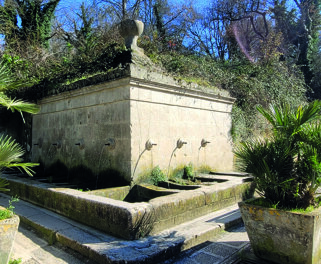
Water, stone, and memory. Fountains dot the town like symbols of identity and beauty. Small jewels of rural architecture, they punctuate history through their names. Below the ancient castle is the Raica Fountain, linked to the exploits of the Saracen leader Raica. The Gadone Turciano Fountain is located near the Sanctuary of Maria Santissima del Bosco, while the San Francesco Fountain stands near the convent of the same name. The most famous fountain is the Di Rolla Fountain, which, despite its original architecture having been significantly altered, was designated by UNESCO as one of the one hundred springs in Italy for "World Water Day." Another fascinating route is through the Valleys, which, seen from above, resemble roots crisscrossing the land. This almost completely uncontaminated strip of land has become a Site of Community Importance (SCI) due to the presence of numerous animal species, especially a small endemic amphibian, the "Salamandrina terdigitata," also known as the spectacled salamander. The discovery of this species and the "rana italica" (Italian frog) gives this site significant herpetological significance. Numerous bird species are also present, including the great spotted woodpecker, the tawny owl, and the nuthatch. Mammals include the water shrew, porcupines, badgers, and, above all, wolves. The ravines represent true ecological corridors between Puglia and Basilicata. The area appears to be of significant value for the "Valle dell'Ofanto".
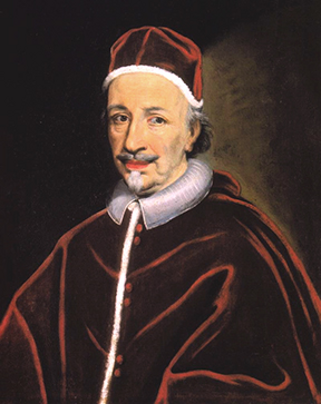
Spinazzola was the birthplace of Pope Innocent XII, born Antonio Pignatelli in 1615 and later living in Minervino Murge. His closeness to the poor, whom he called "my grandchildren" and evidenced by the hospices for the poor he established in Rome, including the one on Monte Citorio, was also a product of his biographical journey and his connection to his hometown. His election came after a lengthy conclave, lasting a full five months. His name was initially opposed by the French cardinals. The Sun King, Louis XIV, did not favor a Pope born in the Bourbon kingdom and therefore close to the Spanish. Once in the papal throne, Innocent XII waged a battle against the privileges of the curia, putting an end to the practice of nepotism. Besides his concern for the poor and his fight against privilege, Innocent XII can also be compared to Pope Francis by a biographical coincidence: he died in 1400, also during the Jubilee Year. Today, in Spinazzola, the municipal administration is committed to rediscovering his figure, based on the valuable testimonies preserved by his descendant, Prince Marzio Pignatelli of Spinazzola. On the edge of the Old Town are the remains of the Pignatelli family castle.
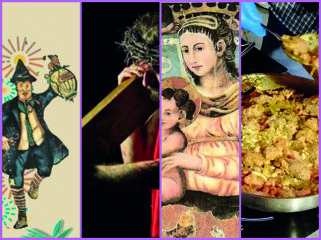
The year opens on January 20th with the Patronal Feast of Saint Sebastian. During the celebration of Mass, the Mayor symbolically hands over the keys to the city to the Bishop. The festival concludes with the procession of the Saint and fireworks in the evening. The Carnival, organized by the Pro Loco, is an ancient tradition deeply rooted among the citizens of Spinazzola, who for the occasion wear costumes and masks to take part in the parade of allegorical floats through the streets of the city, accompanied by music, dancing, and tastings of typical products. Easter rites are deeply felt. Combining faith with the valorization of the territory. This is the goal of the "Living Passion,"an ancient religious tradition featuring approximately 150 participants who still today perpetuate this historic Spinazzola event that involves the main streets of the city. After the celebration of Mass on Easter Tuesday, officiated by the Bishop of the Diocese, the "Historic Mantle of the Virgin" will be awarded, which will be carried in a solemn and well-attended procession from the Madonna del Bosco Sanctuary to the town. On August 14th, the "Historic Mantle of the Virgin" will be returned in procession to the Sanctuary. The Patronal Festival in honor of Maria SS. Del Bosco takes place in August (from the 12th to the 14th). A series of religious, folkloristic, musical, and cultural events await residents and visitors throughout the summer. A fireworks display will conclude the festival. In November, the Cardoncello Mushroom Festival, organized by the local Pro loco, takes place. The event includes food and wine tours with folk music and tastings of traditional dishes, including "u scutid," a mushroom-filled sandwich, and the typical Spinazzola knife-point sausage, which is celebrated with a festival every first weekend in September. The food and wine tradition reveals an enviable heritage of flavors and is brought to life, like a tale, in the sublime art of conviviality at local restaurants. Savor the delicious first courses with strictly handmade pasta, the exquisite cheeses from ancient farmhouses, and the knife-point sausage, made according to an ancient recipe using select cuts of pork and local natural flavors. The traditional peasant dishes are enhanced by the unmistakable extra virgin olive oil, completing the culinary experience with a tasting of the superlative wines from local wineries.
MAPPEDITALIA SOCIAL
Mappeditalia.it © Tutti i diritti riservati